Growth Creates Chaos — Unless You Fix Operations
For many e-commerce brands, growth doesn’t feel like success.
Revenue goes up — but so does manual work, operational stress, and constant firefighting. Orders increase, inventory becomes harder to track, reports are always outdated, and teams spend more time moving data than making decisions.
This is not a failure of tools.
It’s a failure of operations design.
E-commerce operations automation exists to solve exactly this problem.
What Are E-Commerce Operations (Really)?
When people think about e-commerce, they often think about storefronts, ads, and conversions. But behind every successful store is a complex operational engine.
E-commerce operations typically include:
-
Order processing and fulfillment workflows
-
Inventory, stock, and production readiness
-
Supplier and ERP synchronization
-
Financial data flow and reporting
-
Marketing data alignment (ads, attribution, performance)
-
Internal task management and alerts
When these systems are disconnected, humans become the integration layer — copying, checking, reconciling, and fixing errors manually.
That doesn’t scale.
The Hidden Cost of Manual E-Commerce Operations
Manual processes rarely look expensive at first. But over time, they quietly drain margins and momentum.
Common hidden costs include:
-
Human error caused by repetitive data handling
-
Delayed decisions due to outdated or incomplete reports
-
Operational bottlenecks that slow fulfillment and growth
-
Burnout in teams forced to “patch” broken workflows
-
Founder dependency, where everything still flows through one person
By the time these issues are visible, they’re already limiting growth.
What E-Commerce Operations Automation Actually Means
E-commerce operations automation is not about adding more tools.
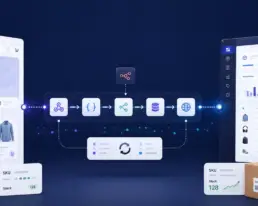
It’s about connecting the tools you already use into a single, reliable operational system.
True operations automation means:
-
Data flows automatically between platforms
-
Business rules trigger actions without human intervention
-
Systems stay synchronized in real time
-
Dashboards reflect reality, not guesses
-
Teams focus on decisions, not data movement
This goes far beyond simple “if this, then that” automations. It’s about building a resilient operational backbone.
Real-World Automation Examples (Without the Buzzwords)
Here are real scenarios where operations automation delivers immediate value:
-
Inventory readiness automation
Automatically flag products that cannot be fulfilled due to missing stock or components. -
Production and fulfillment alerts
Trigger internal tasks when bottlenecks or idle time appear. -
Centralized operational dashboards
Combine sales, ads, inventory, and fulfillment data into one source of truth. -
Automated task creation
Turn operational events into actionable tasks without manual coordination.
None of these replace people — they remove friction.
When Automation Becomes a Competitive Advantage
Brands that automate operations gain advantages that are difficult to copy:
-
Faster response to operational issues
-
Leaner teams without sacrificing output
-
Better margins through reduced waste
-
Predictable scaling without chaos
-
More time for strategy instead of firefighting
Automation doesn’t just reduce costs — it improves decision quality.
How to Start Automating Without Rebuilding Everything
You don’t need to automate everything at once.
The most effective approach is incremental:
-
Identify where manual work happens daily
-
Centralize critical operational data
-
Automate one high-friction workflow
-
Expand only after stability is proven
Automation should support growth — not introduce fragility.
Final Thoughts
E-commerce success today is no longer just about marketing or technology.
It’s about operational clarity.
Brands that invest in e-commerce operations automation don’t just grow faster — they grow calmer, smarter, and more resilient.
If your business feels increasingly complex as it scales, that’s not a warning sign.
It’s a signal that your operations are ready to evolve.
Next in this series:
→ Automating Inventory Readiness in E-Commerce
→ Why Growing E-Commerce Brands Break at €1–5M Revenue
→ How to Eliminate Manual Order Processing Without Hiring More People
Want us to look at your own operations? Get a free automation audit and we’ll show you what’s worth automating first.
Let's talk
Want an outside look at how this could work for you?
Book a free call with Szilard. We'll look at what's actually happening in your setup and tell you straight whether there's something worth fixing.